“The Option Method takes unhappiness from that vague cloud of confusion and that which just happens to you and brings it down to the real dynamics that cause your emotions . . . your beliefs and your judgments.” Is Happiness a Choice? The Option Method Philosophy by Bruce M. Di Marsico
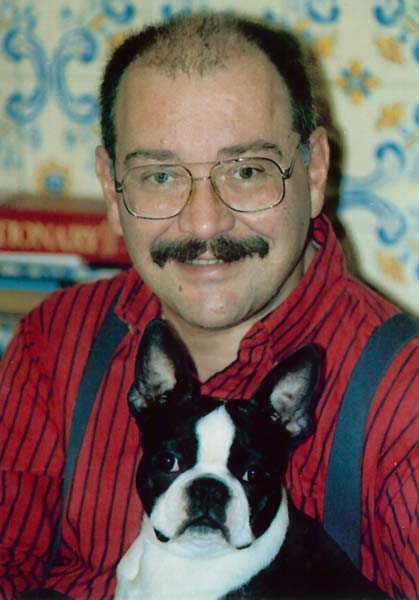
Bruce Di Marsico created the Option Method to help people help themselves to find their deepest wisdom and happiness.
Bruce recognized that people were unhappy because they believed that they should be, that it was good, simply unavoidable or necessary to feel bad. Bruce believed that people had a choice when it came to their emotions.
Bruce M. Di Marsico
(1942-1995)
About Bruce
Bruce Michael Di Marsico was born in 1942 in Weehawken, New Jersey. He was the first child born to Onofrio (Alfred) Di Marsico and Elizabeth (Bette) Bauer. In their first child they found an exceptionally bright and precocious boy. While Alfred tried disciplinarian methods, Bette turned to Dr. Spock in raising him. As he grew older he became so adept at reasoning with his mother when he wanted something that it became obvious it was she who was learning from him.

Bruce was a restless child in school and was advanced a grade in elementary school after being tested by a psychologist. When it came time to attend high school he requested that he attend a Catholic school. He was drawn to a spiritual quest at a very young age.
Upon graduating high school, he was still seeking an immersion in theological study and chose to pursue a monastic life. He entered the Trappist order. After spending some time there as a novice he realized it was not the right path for him.
He decided to attend university and explore psychology and philosophy. He was fascinated by mankind’s eternal pursuit of happiness. He thoroughly enjoyed the spiritual passions of the heart and soul. He always kept a volume or two of Butler’s The Lives of the Saints at his bedside, loving the mysteries of the mystics.
It was his own quest for happiness—the same desire that drew him to Catholic school, the monastery and the study of the works and teachings of many from Buddha to Freud that he came to create the Option teachings and attitude. However, it was because of the joy he derived from helping others that he naturally came to develop the Option Method.
Bruce drew upon the wisdom of ancient philosophers. It was the Greek philosopher Epictetus who said:
“Men are not worried by things, but by their ideas about things. When we meet with difficulties, become anxious or troubled, let us not blame others, but rather ourselves, that is, our ideas about things.“
Bruce realized it was not what was happening that made people unhappy, but their beliefs about what was happening that created their emotional responses. He developed his Option Method Questions based on the Socratic Method of teaching using non-judgmental questions. The theory of recollection, according to Socrates, means that before we are born we possess all knowledge. We are never taught anything new, but instead are reminded of things we already know. Bruce felt this was true about our happiness. He believed that every one of us already possess everything we need to be happy.
Bruce became a psychotherapist and around 1970 and introduced Option at a paraprofessional school called Group Relations Ongoing Workshops (GROW) in New York City. Bruce’s classes became “standing room only” as he taught laymen and practitioners from a variety of backgrounds his Option Method. Over the years Bruce offered various workshops and groups in and around New York City, Long Island and New Jersey. When GROW closed a group of students asked him to continue teaching them. He created what came to be known as the “Monday night group” at his home in Montclair, New Jersey. A closeness and camaraderie developed among them and oftentimes discussions would carry on into dawn with breaks for Fettuccini Alfredo family style in the large eat-in kitchen.
In the 1980’s and 1990’s Bruce continued to conduct workshops and groups from his home in Montclair as well as seeing private clients in his office in Greenwich Village, New York City. It was during this time that Bruce was diagnosed with heart disease and later diabetes. Through years of physical pain and suffering he continued to teach as he did in his last recorded lecture on November 11, 1995.
Bruce’s last recorded lecture – Part 1
Bruce’s last recorded lecture – Part 2
Bruce was a testament to his own Option realization that pain itself cannot cause us to be unhappy. Bruce passed away on December 4th, 1995, with several of his last students at his side.